Brass vs copper: differences in color, care and use at home

Copper is a pure metal; brass is copper mixed with zinc. Here's how they differ in color, patina, hardness and care — and how to use each in kitchens and bathrooms.

Brass vs copper: differences in color, care and use at home

Brass and copper are close relatives — brass is mostly copper — but they look, age and behave differently. If you're choosing between a copper sink and a brass one, or wondering whether you can combine them, this guide is for you. For background, see what is brass?

The essentials

  • Copper is a pure metal with a pink-red color.
  • Brass is an alloy of copper and zinc with a yellow-gold color.

Comparison at a glance

Copper Brass
Composition Pure copper Copper + zinc
Color when new Pinkish-red, rosy Warm yellow-gold
Patina Brown, then blue-green over time Honey to brown; green only where moisture sits
Hardness Softer, dents more easily Harder, more dent-resistant
Common uses Sinks, tubs, cookware, lighting Faucets, hardware, sinks, lighting

Color and how each ages

New copper glows rosy-pink and darkens to a rich chocolate brown. With moisture and time, it can form the blue-green verdigris seen on old roofs and statues. Some copper pieces are given a green patina on purpose, like this green patina copper clawfoot tub with brass feet.

Brass starts golden and mellows to honey and brown. It can develop green spots where water sits, but its overall aging is more subtle. See does brass rust or tarnish?

Durability

Because copper is softer, copper sinks are often hammered — the texture hides the small dents and marks that come with daily use. Brass is harder, which is one reason it's preferred for parts that must keep precise shapes, like faucet bodies and valves.

Care

Both metals are cleaned the same way: mild soap, water, a soft cloth and thorough drying. Both can be polished back to bright or left to age. Avoid abrasive pads and harsh chemicals on either. Our guide on how to clean brass applies to copper too.

Which to choose where

  • Kitchen sink: copper for a rustic, warm-red statement; brass for a golden, slightly brighter look.
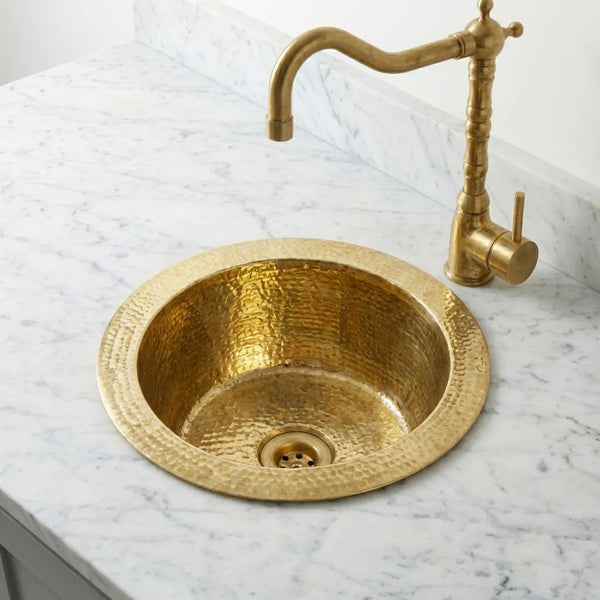
  • Bathroom basin: both are beautiful; a hammered brass round sink suits a powder room or bar.
  • Faucets and hardware: brass is the traditional choice.
  • Lighting: copper glows warmer; brass reads more golden.

Mixing brass and copper

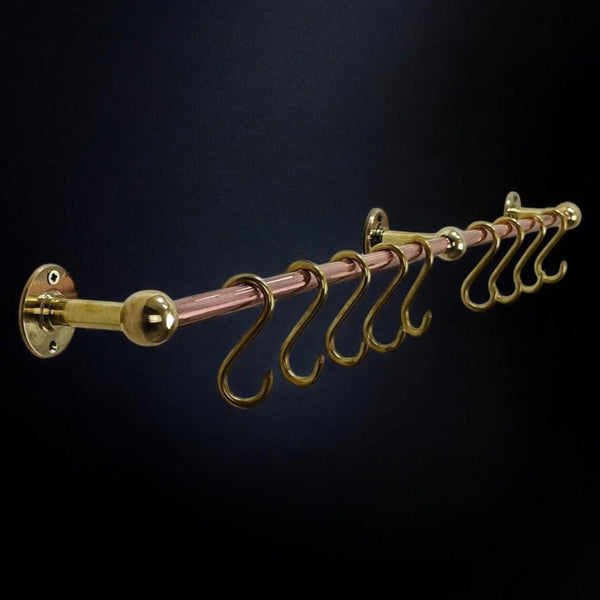
They pair naturally because both have warm undertones. A simple approach: make one metal dominant and repeat the other two or three times — for example a copper sink with brass faucet and rails, like this copper and brass kitchen pot rail. For the brass's cousin, read brass vs bronze.

Explore our copper collection and solid brass collection.
Shop this guide

Shop Solid Brass ›Shop Copper ›

Questions

Is brass or copper more durable?

Brass is harder and more resistant to dents than pure copper, which is softer and more malleable.

Does copper turn green?

Over time and with moisture, copper can develop a blue-green patina called verdigris. Brass can too, but usually less, and it typically ages to brown tones first.

Can I mix brass and copper in one room?

Yes. They share warm undertones. Choose one as the main metal and repeat the other in a few smaller details.

How can I tell copper from brass?

Copper is pinkish-red; brass is yellow-gold. Freshly cleaned, the difference is obvious.

More on Brass basics

About Varaudu

Honest materials.
Patient hands.

Varaudu is a home brand based in Bari, Italy. We bring together brass and copper pieces made by skilled artisans — sinks, faucets, lighting, mirrors and hardware, chosen for honest materials and timeless design.

These guides share what we've learned about living with brass and copper, so you can choose well and enjoy your pieces for decades.

— The Varaudu team, Valenzano (Bari), Italy

Questions

Shopping with Varaudu.

How much does shipping cost?

Nothing. Shipping is free on every order, worldwide, with no minimum spend.

How long does delivery take?

Orders are prepared within 5 working days of payment verification (this can be slightly longer in peak seasons). Once dispatched, delivery is estimated at 7 working days — it can vary with your location and customs. You'll receive a tracking number by email as soon as your order ships. Deliveries are made to street level.

Can I return an item?

Yes. You have 30 days after receiving your item to request a return. Items must be unused and in the same condition you received them, with any tags and in the original packaging, together with your receipt or proof of purchase. Please contact us first at Varauducontact@gmail.com — parcels sent back without a return request can't be accepted. Custom or special orders, sale items and gift cards can't be returned. Approved refunds are made to your original payment method within 10 business days.

Are your pieces really handmade?

Yes. Each piece is shaped and finished by hand, so small differences in size, tone and texture from the photos are normal — and part of what makes it yours.

My item arrived damaged. What should I do?

Please inspect your order as soon as it arrives. If the outer packaging is damaged, note it on the courier's delivery receipt before signing. If your item is damaged, defective or not what you ordered, email Varauducontact@gmail.com right away — and no later than 14 days after delivery — with photos of the item and packaging. We'll review it and offer a solution, such as a repair, replacement or refund.

Can you help me choose the right piece?

Of course. Email Varauducontact@gmail.com or call +39 351 496 0191 with your measurements or a photo of your space, and we'll help you choose.

Free worldwide shipping

On every order, with no minimum.

Fully tracked delivery

Prepared within 5 working days, tracking sent by email.

30-day returns

Request a return within 30 days of delivery.

Secure checkout

Encrypted payments through Shopify checkout.