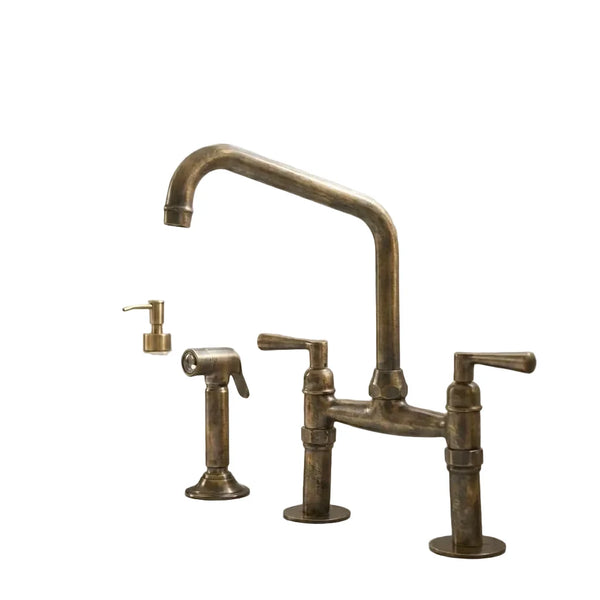
"Brass" can mean anything from mirror-bright gold to deep, almost bronze-brown. The difference is the finish — how the surface has been treated — and whether it's protected by lacquer or left to age. Here's how the main brass finishes compare. For the basics, see what is brass?
What color is brass?
Freshly polished brass is a warm yellow-gold — softer and more buttery than real gold, and lighter than copper. As it ages or is finished differently, it moves through satin gold, honey, amber and antique brown. The exact tone also depends on the alloy: more copper means a redder brass; more zinc means a paler one.
The main brass finishes
| Finish | Look | Fingerprints & water marks | Changes over time? | Best for |
|---|---|---|---|---|
| Polished | Mirror-bright, reflective | Shows them easily | Only if unlacquered | Statement pieces, traditional spaces |
| Brushed | Fine lines, soft sheen | Hides them well | Slowly | Modern kitchens and bathrooms |
| Satin | Smooth, low sheen | Hides them well | Slowly | Hardware, contemporary interiors |
| Antique / aged | Dark, warm, varied | Hides them very well | Little | Vintage, rustic and farmhouse spaces |
| Unlacquered | Starts bright, develops patina | Blends into patina | Yes — that's the point | People who love a living finish |
| Hammered | Dimpled, handmade texture | Hides them very well | Depends on finish | Sinks, rails and artisan pieces |
Polished brass
The classic, high-shine gold. Beautiful in traditional bathrooms and as a contrast to dark cabinetry. If unlacquered, it will dull to a softer glow unless polished regularly.
Brushed and satin brass
Brushing creates fine directional lines; satin is a smooth, low-sheen surface. Both soften the reflection and are forgiving in busy kitchens and family bathrooms.
Antique brass
A darkened, aged look with deeper browns in recesses. It suits vintage, rustic and farmhouse interiors and hides marks well. Try a handmade antique brass bridge faucet or an antique brass towel ring.
Unlacquered brass
No coating at all. It starts bright and ages naturally with use. It's the most authentic finish and the easiest to restore. Read our complete guide to unlacquered brass.
Hammered brass
A texture rather than a color: the surface is shaped by hand with a hammer, leaving small facets that catch the light. It's especially practical on gallery rails and sinks, where it disguises wear.
Lacquered vs unlacquered — the hidden choice
Any of these finishes can be sealed with clear lacquer to slow tarnish. Lacquer keeps the look stable but can't be polished and can chip. Unlacquered brass ages, but can be polished back whenever you like.
How to choose
- Low maintenance, modern: brushed or satin.
- Vintage, warm, forgiving: antique or hammered.
- Authentic, evolving, restorable: unlacquered.
- Glamorous and bright: polished.
Mixing brass finishes
Different brass finishes can live in the same room — for example an antique faucet with hammered rails — as long as the tones stay in the same warm family. Unlacquered pieces will naturally blend together as they age.
Cleaning differs by finish: see how to clean brass. Explore faucets and showers and bath and kitchen hardware.