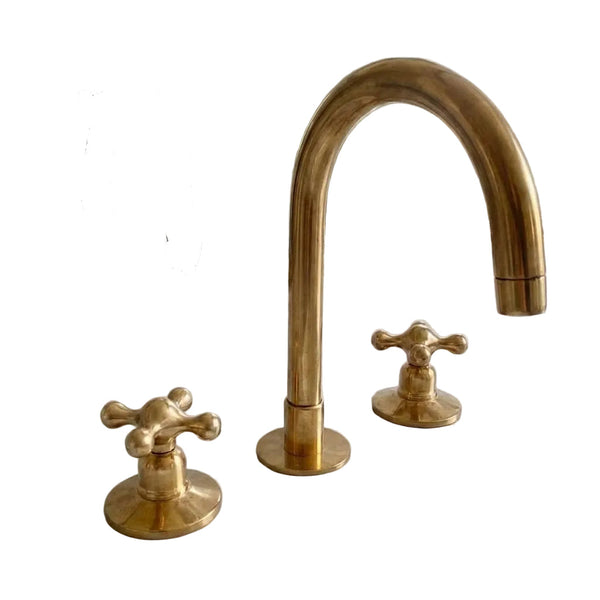
Brass and bronze are cousins. Both are copper alloys, both have warm metallic tones, and both have been used for thousands of years. But they're not interchangeable, and the difference matters when you're choosing fixtures for your home.
If you're new to the topic, start with our guide to what brass is.
The short answer
- Brass = copper + zinc. Brighter, more golden, easier to machine. The classic choice for faucets, sinks, hardware and lighting.
- Bronze = copper + tin. Darker, browner and harder. Traditionally used for statues, bells, ship fittings and bearings.
What they're made of
| Brass | Bronze | |
|---|---|---|
| Main metals | Copper and zinc | Copper and tin |
| Typical copper content | Around 60–70% | Around 85–90% |
| Other elements | Sometimes small amounts of lead, aluminum or others | Sometimes aluminum, phosphorus or silicon |
Because bronze usually contains more copper, it has a deeper, redder tone. The zinc in brass pulls it toward a lighter, sunny gold.
Color and look
- Brass: bright yellow-gold when polished; ages to honey and soft brown.
- Bronze: brown-gold with reddish depth; ages to dark brown and, outdoors, greenish tones.
If you want the warm "gold" look that defines vintage bathrooms and kitchens, brass is the metal you're picturing.
Strength and durability
Bronze is generally harder and more resistant to wear and saltwater corrosion, which is why it's used for boat propellers and marine hardware. Brass is slightly softer, which makes it easier to shape, thread and polish — ideal for precise parts like faucet bodies and valves.
For everyday household use, both are extremely durable. A solid brass faucet or hook will easily last decades.
Corrosion and rust
Neither metal rusts, because neither contains iron. Both develop a surface patina over time. We explain the difference between rust and tarnish in detail in our guide to unlacquered brass.
Common uses
Brass: faucets and plumbing fittings, sinks, door and cabinet hardware, lighting, musical instruments, decorative objects.
Bronze: sculpture, bells, bearings and bushings, ship fittings and some architectural hardware.
What about "bronze" finishes on faucets?
Names like "oil-rubbed bronze" or "antique bronze" describe a color, not a material. These fixtures are often brass underneath with a dark surface finish. That's not a bad thing — it just means you should check the actual base metal if it matters to you.
Which should you choose?
For faucets, sinks, showers and hardware, brass is the traditional and practical choice: it machines precisely, resists water corrosion and can be polished or left to patina. Choose bronze when you specifically want a darker, browner metal or a sculptural, marine-grade piece.
Browse our solid brass collection or start with kitchen faucets.