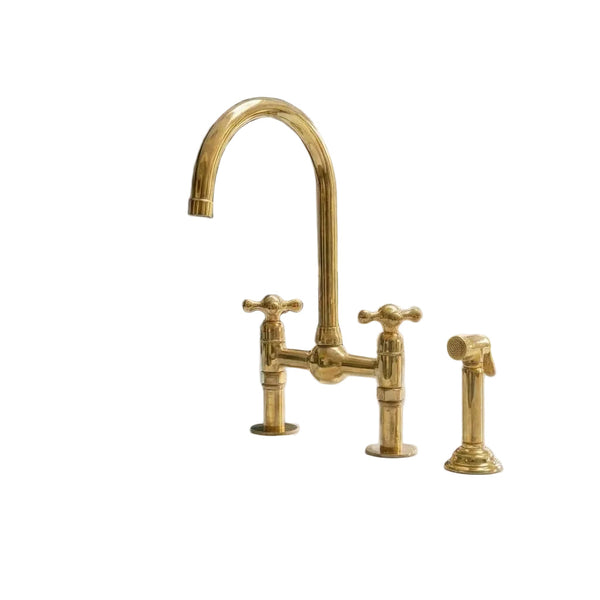
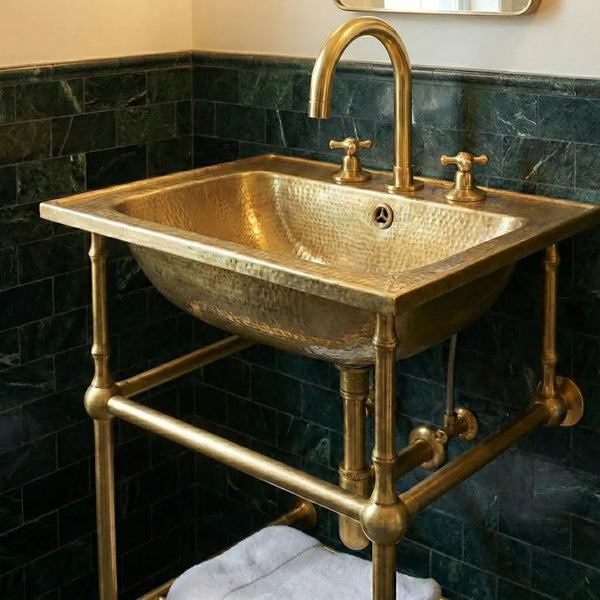
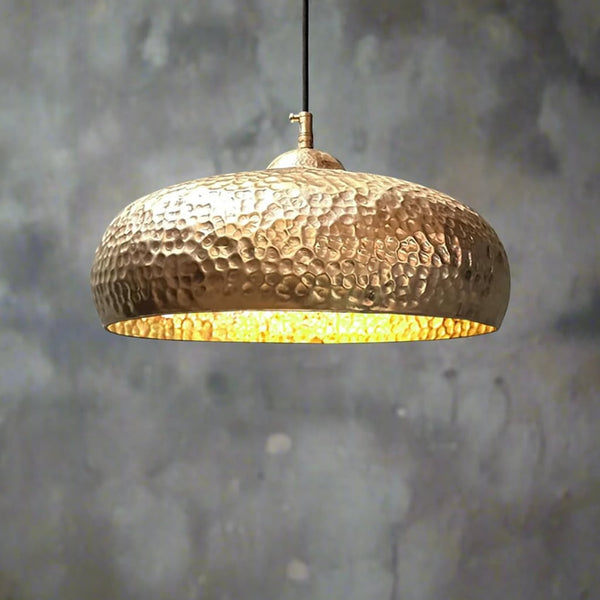
Brass is one of those materials you've touched a thousand times without thinking about it: door handles, old ship lamps, the taps in a grand hotel bathroom. It has been used for centuries because it looks warm, works beautifully and lasts almost forever.
This guide explains what brass is made of, why it looks the way it does, and why it's such a good choice for the fixtures you use every day. If you're already shopping, start with our solid brass collection.
What brass is made of
Brass is an alloy, a metal made by melting two or more metals together. In brass's case, those metals are:
- Copper, which gives warmth, color and natural corrosion resistance.
- Zinc, which lightens the color toward gold and makes the metal harder and easier to machine.
Most brass used for homeware contains roughly 60–70% copper and 30–40% zinc. Changing the balance changes the look: more copper gives a redder, richer tone; more zinc gives a paler, more yellow gold.
What brass looks like
Freshly polished brass has a bright, warm gold color. Left uncoated, it slowly darkens to honey, amber and brown tones as it reacts with air and moisture. That layer is called patina, and it's a big part of why people love brass. We explain it in detail in our complete guide to unlacquered brass.
Manufacturers can also finish brass in different ways — polished, brushed, satin or antiqued — each giving a different shine and texture.
The properties that make brass so useful
- It doesn't rust. Rust is iron oxide, and brass contains no iron. It tarnishes instead, which is only a surface color change.
- It resists corrosion from water, which is why it's used for faucets, valves and plumbing fittings.
- It's easy to shape. Brass can be cast, hammered, turned and engraved, so artisans can create detailed shapes and textures.
- It's durable. Solid brass fixtures commonly last for decades and can be repaired, refinished and polished again and again.
- It isn't magnetic. A useful trick for spotting brass-plated steel.
Solid brass vs brass-plated
Not everything that looks like brass is brass. Brass-plated items have a thin brass layer over a cheaper metal such as steel or zinc. They can look good at first, but scratches eventually reveal the metal underneath, and they can't be polished back.
Solid brass is brass all the way through. Scratches can be buffed out, the patina develops evenly, and the piece can be restored years later. When you're investing in a faucet, sink or set of hardware you'll use daily, solid brass is the material that rewards you over time.
Brass vs other metals at a glance
| Metal | Made of | Color | Key difference |
|---|---|---|---|
| Brass | Copper + zinc | Warm gold | Bright, easy to shape, ideal for fixtures |
| Bronze | Copper + tin | Darker brown-gold | Harder, often used for statues and marine parts |
| Copper | Pure copper | Reddish-pink | Softer, develops brown then green patina |
| Stainless steel | Iron + chromium | Silver | Cool tone, magnetic in many grades |
Each has its place, but for warm-toned fixtures you touch every day, brass offers the best balance of beauty, workability and durability.
Where brass works best in a home
- Kitchen: bridge faucets, pot fillers, farmhouse sinks and rails.
- Bathroom: faucets and showers, basins, towel bars and toilet paper holders.
- Lighting: pendants and wall sconces, where brass reflects a warm glow.
- Small details: hooks, rails and holders — the easiest way to bring brass into a room.
Is brass right for your home?
If you like materials with warmth, weight and a sense of history, brass is hard to beat. It pairs naturally with marble, wood, plaster and stone, works in both traditional and modern spaces, and gets more characterful the longer you live with it.
Every Varaudu piece is shaped and finished by hand. Explore our solid brass collection to see the range.