The right vanity height makes everyday routines comfortable; the wrong one means bending over the basin for years. Here are typical vanity dimensions and how to choose. For style ideas, see brass bathroom ideas.
Height
| Type | Typical height |
|---|---|
| Traditional vanity | 30–32 in (76–81 cm) |
| Comfort-height vanity | 34–36 in (86–91 cm) |
| Children's bathroom | Lower, adjusted to age |
Many adults find comfort height easier on the back. Choose based on who uses the bathroom most.
Depth
- Standard: about 21 inches (53 cm).
- Narrow / small bathrooms: 18 inches (46 cm) or less.
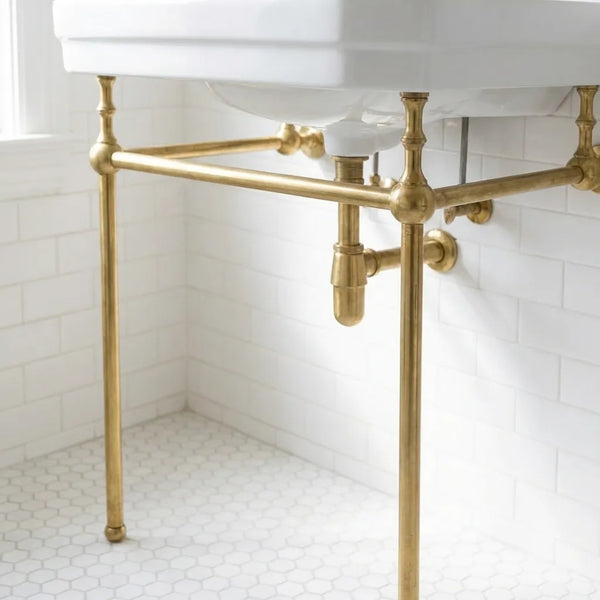
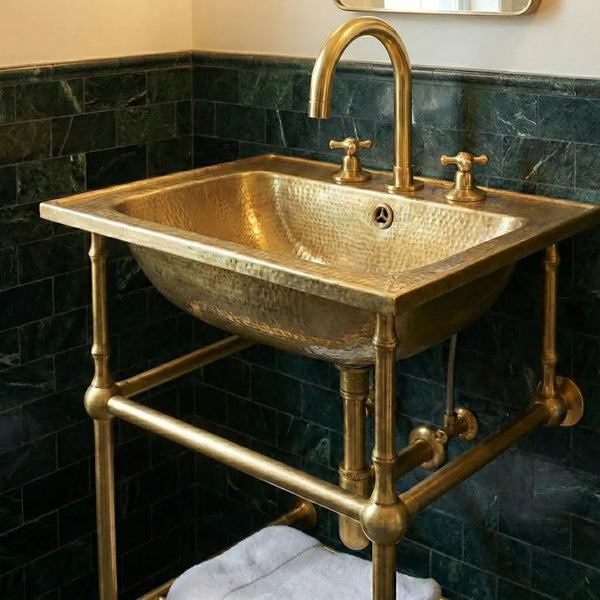
- Console sinks on legs feel lighter because the floor stays visible — like this unlacquered brass console vanity or a hammered brass console sink with legs.
Width
Common widths include 24, 30, 36, 48, 60 and 72 inches (61–183 cm). Double vanities usually start around 60 inches to give each person room.
Vessel sinks change the math
A vessel sink sits on top of the counter, often adding 4–6 inches. To keep the rim at a comfortable height, pair it with a lower vanity. Faucets need to be tall enough — or wall-mounted — to clear the bowl. We'll cover this in detail in our vessel sink guide.
Wall-mounted options
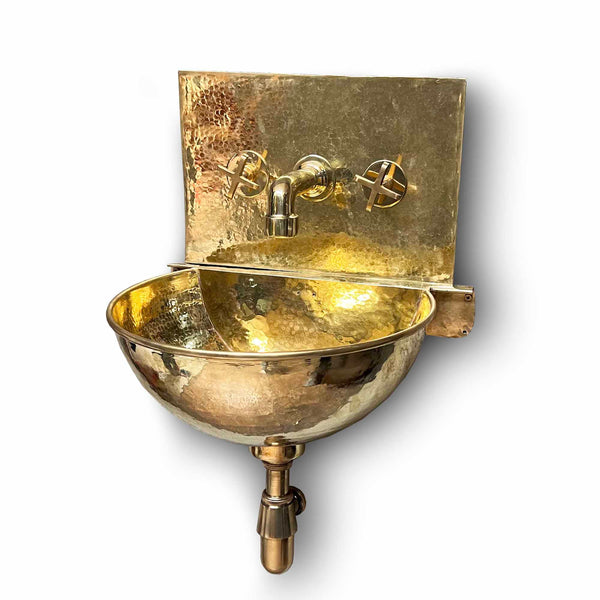
A wall-mount brass sink lets you set the height exactly where you want it and frees the floor, making small bathrooms feel bigger.
Faucet placement
- Deck-mounted: check the faucet's spout reach so water lands near the center of the basin.
- Wall-mounted: set the outlet height for your sink; a three-hole wall-mounted vanity faucet suits classic designs.
Clearances
- Leave comfortable standing space in front of the vanity.
- Allow room for drawers and doors to open fully.
- Keep the vanity clear of door swings.
Check local building guidance and confirm with your installer.
Mirror and lighting
A mirror slightly narrower than the vanity and sconces on both sides complete the setup. See bathroom lighting ideas.
Browse bathroom sinks and bathroom faucets.