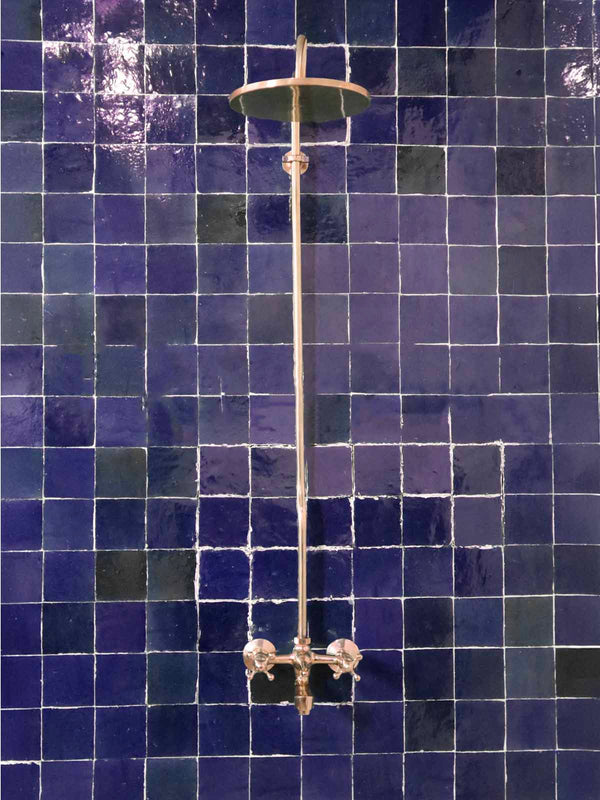
Exposed showers bring the romance of old hotels and country houses into a modern bathroom. Instead of hiding the plumbing, they make it the feature. Here's how they work and how to choose one. For the full room, see walk-in shower ideas.
Exposed vs concealed
| Exposed | Concealed | |
|---|---|---|
| Pipework | On the wall surface | Inside the wall |
| Look | Vintage, decorative | Minimal |
| Renovation | Often simpler to retrofit | Needs wall access |
| Maintenance access | Easy | Behind panels or tiles |
The parts of an exposed shower
- Valve / mixer: controls temperature and flow, often with cross or lever handles.
- Rigid riser: the vertical pipe connecting the valve to the head.
- Shower head: often a large round rain head.
- Handheld (optional): on a hook or slide rail.
- Tub spout (optional): for shower-over-bath setups.
Styles
- Traditional rigid riser: classic, symmetrical and timeless — see this solid brass rigid riser shower mixer.
- Statement exposed system: larger heads and more elaborate pipework, like this luxury exposed brass shower.
- Tub and shower set: combines a bath filler and shower in one exposed system — an exposed brass bathtub and shower set.
Finishes
Unlacquered brass is the classic choice: it ages with warmth and character. Lacquered and antique finishes change less. Compare them in lacquered vs unlacquered brass.
Planning and installation
- Check your water pressure and system with your plumber.
- Plan the height of the head and valve (see standard shower dimensions).
- Choose the tile first — exposed fittings look best against simple, even tiling.
- Have it installed by a qualified plumber in line with local regulations.
Care
Wipe dry after showering, clean with mild soap and a soft cloth, and avoid harsh bathroom cleaners on the metal. See how to clean brass.
Browse all shower systems.