A second, smaller sink transforms how a kitchen works: one person washes up while another preps vegetables, or drinks are served without anyone crossing the cook. Here's how to plan one. For main sink sizes, see our kitchen sink sizes guide.
Where to put it
- Kitchen island: the classic prep sink spot.
- Bar or drinks station: for glasses, ice and cocktails.
- Butler's pantry: a quiet place for flowers and prep.
- Outdoor kitchen: check materials and winterizing first.
Sizes and shapes
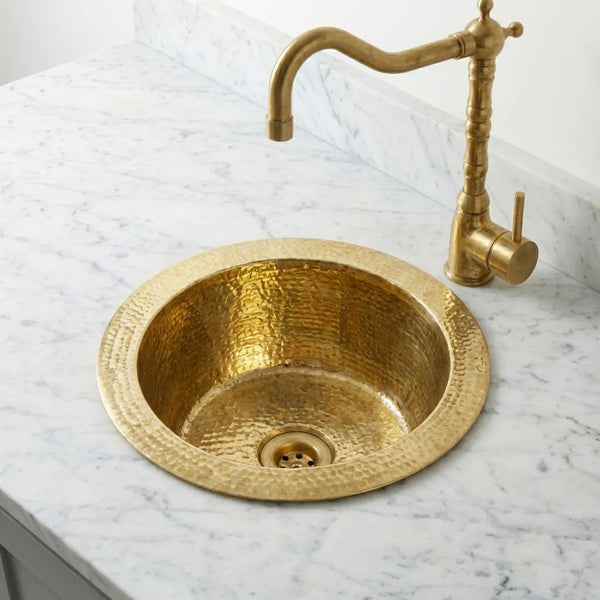
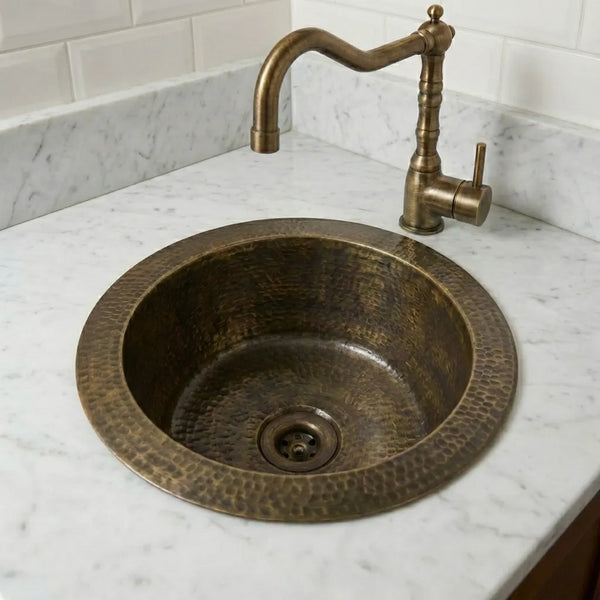
- Round: compact and sculptural — a handmade hammered brass round sink or a hammered antique brass bar sink.
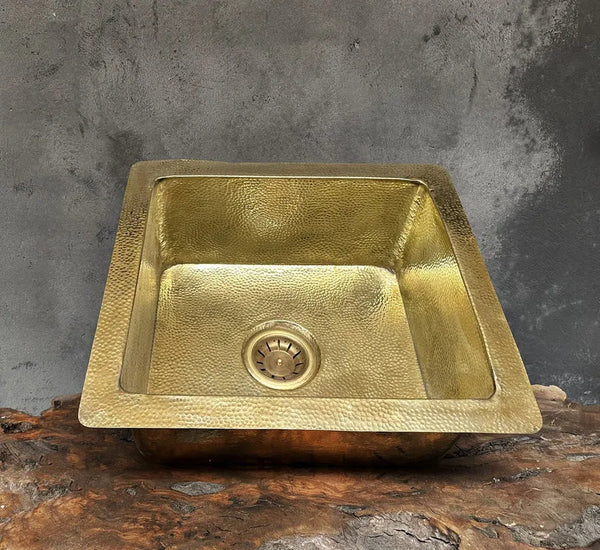
- Rectangular: more usable space for washing — an antique solid brass undermount bar sink comes in several sizes.
- Typical width: about 12–18 inches (30–46 cm).
Choosing a material
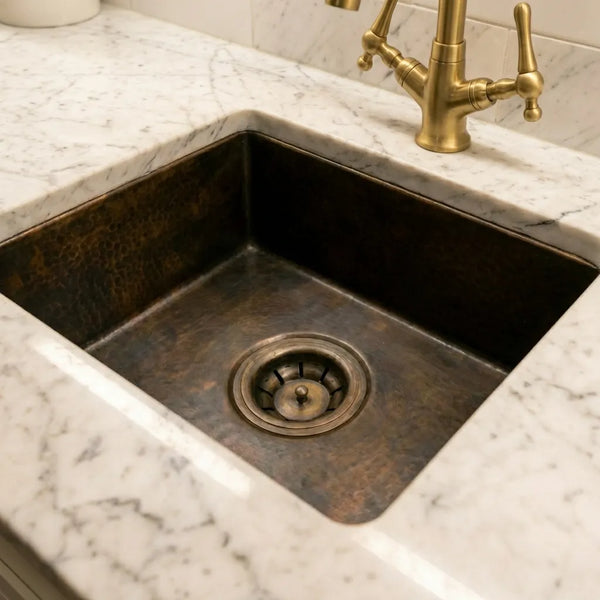
Small sinks are a great place to use a special material: a brass or copper bar sink adds a jewel-like detail without dominating the room. Some models — like this hammered brass bar sink — come lacquered or unlacquered. Compare finishes in lacquered vs unlacquered brass.
Choosing a faucet
- A compact single-hole or bar faucet scaled to the sink.
- Match the main kitchen faucet's finish, or use the bar sink as an accent.
- Make sure the spout reaches the center of the small bowl.
Mounting
- Undermount: seamless and easy to wipe.
- Drop-in: easier installation in existing counters.
Planning
- Confirm water supply and drain access at the chosen spot.
- Allow enough counter space on either side.
- Have it installed by a qualified plumber.
Care
Rinse and dry after use; wash with mild soap. See how to clean brass.
Browse all bar and prep sinks.